

Updated November 18, 2026, with the May–December 2026 train schedules and this month’s prices.
Quick answer
No road reaches Aguas Calientes (Machu Picchu Pueblo): the last stretch is by train or on foot. There are four ways to get there from Cusco:
- Car to Ollantaytambo, then train (the most common, all year): 3 h 30 to 4 h 30 in total. A standard-class train costs US$ 60 to 80 each way.
- Direct train from Cusco (Poroy or San Pedro stations): PeruRail only, May to December. 3 h 15 to 4 h 40 on the train.
- Car to Hidroeléctrica, then walk (the cheapest): a shared van for about US$ 30 round trip plus a 10 km (6 mi) walk. It takes most of a day.
- Inca Trail: 2 or 4 days on foot, with a permit.
The four ways to get there, compared
| Option | Time from Cusco | Approximate price | Best for |
|---|---|---|---|
| Car to Ollantaytambo + train | 3 h 30 to 4 h 30 | Train from US$ 60 each way, plus the transfer to Ollantaytambo | Most travelers; runs all year |
| Train from Cusco (Poroy or San Pedro) | 3 h 15 to 4 h 40 on the train | More than from Ollantaytambo | Those who don’t want to switch vehicles; May to December only |
| Car to Hidroeléctrica + walk | 8 to 11 h | Van US$ 14 to 18 each way; the walk is free | Tight budgets and good fitness |
| Inca Trail | 2 or 4 days | From US$ 845 (2 days) with Tari | Those who want to arrive on foot; book months ahead |
Via Ollantaytambo: car and train
This is the route almost every tour uses. It has two legs:
- Cusco to Ollantaytambo by road: 1 h 30 to 2 h. A shared colectivo costs S/ 15 to 20 per person; a street taxi, S/ 120 to 160; a Tari transfer, US$ 50 in a sedan or US$ 60 in a minivan. Details in how to get from Cusco to Ollantaytambo station.
- Train from Ollantaytambo to Aguas Calientes: 1 h 20 to 1 h 45, with PeruRail or Inca Rail.
| Service | Price | What you get |
|---|---|---|
| Standard: PeruRail Expedition, Inca Rail The Voyager | US$ 60–80 | Comfortable seats and big windows. Most people take this one. |
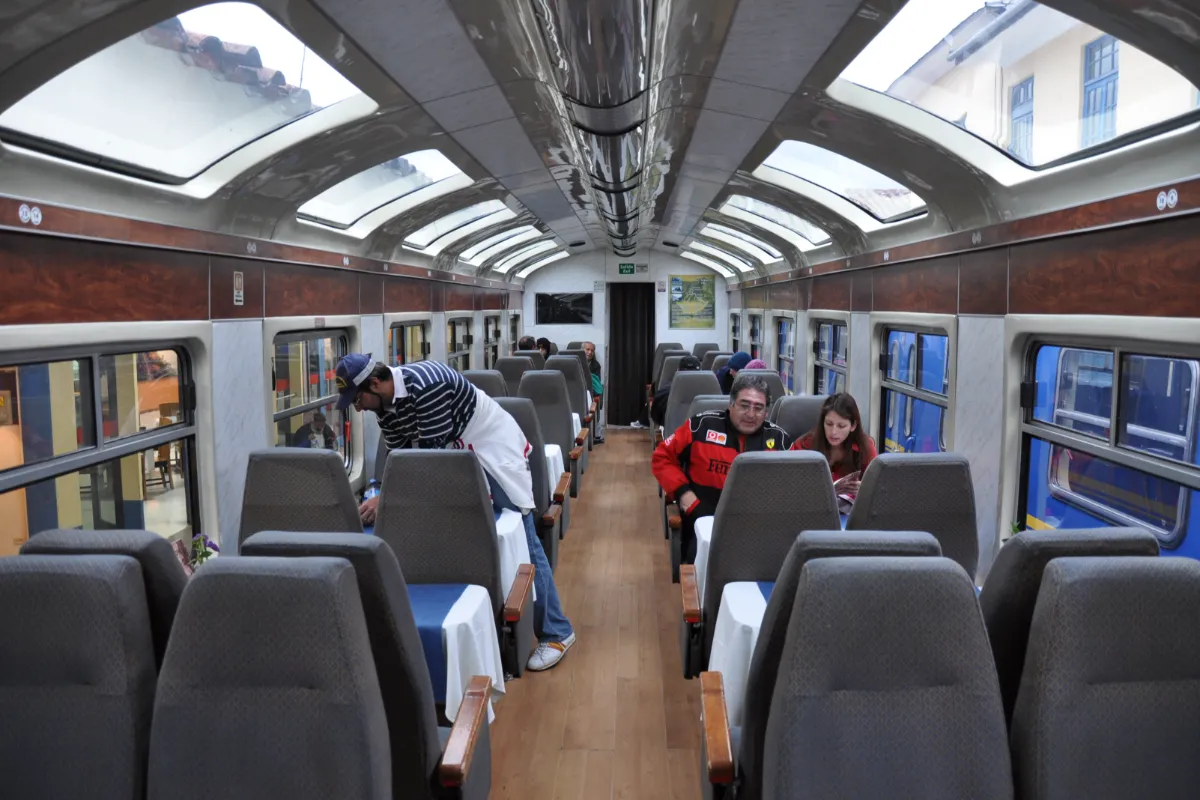
| Panoramic: PeruRail Vistadome, Inca Rail The 360° | US$ 75–110 | Roof windows and a snack; some have live music or an open-air car. |
| Luxury: Belmond Hiram Bingham | US$ 400–550 | Meals and a bar on board. Leaves from Poroy or San Pedro. |
Prices change by date and departure time, and morning trains tend to sell out first. Buy your train after you have your Machu Picchu entry ticket, on a departure that gets you there before your entry time. How the two companies compare: PeruRail vs. Inca Rail.
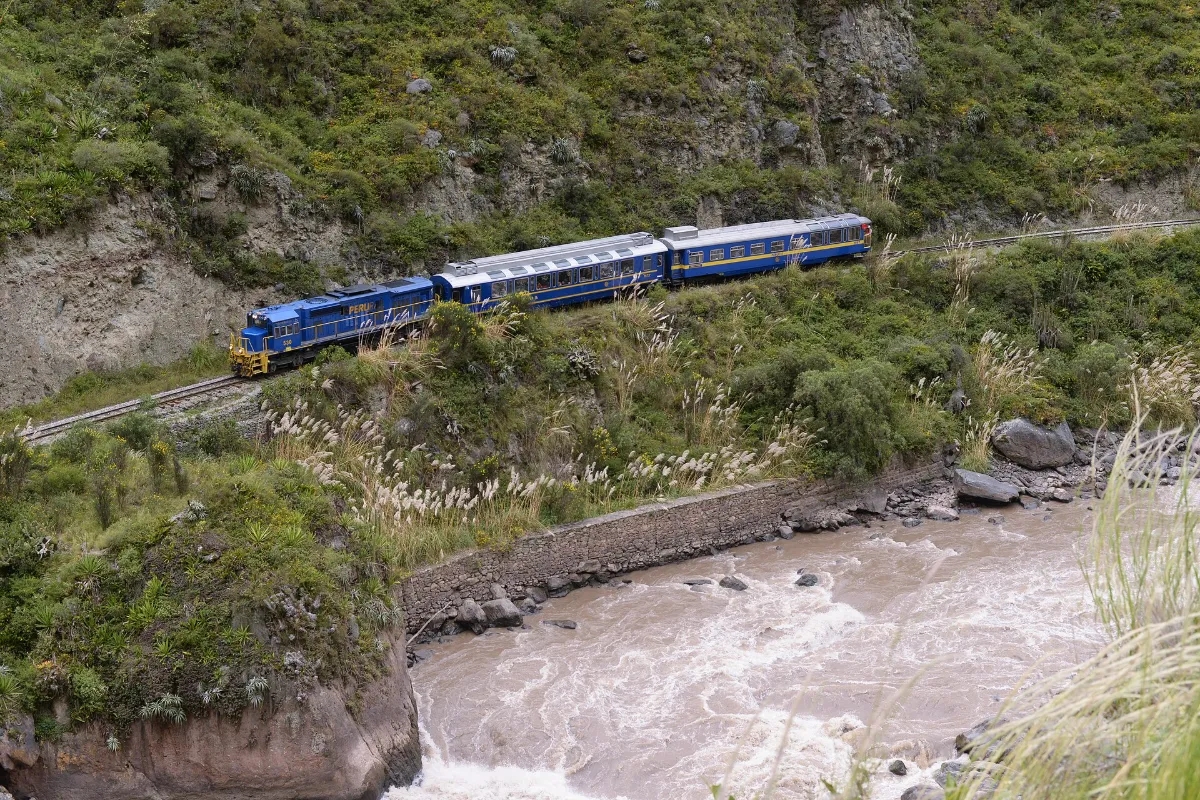
Only carry-on luggage is allowed on the train: Inca Rail allows 8 kg (17.6 lb), and PeruRail a backpack of 8 kg or a carry-on of up to 12 kg (26.5 lb). Ollantaytambo has free luggage storage. Get to the station 30 minutes before departure.
Direct train from Cusco: Poroy and San Pedro
Since May 1, 2026, PeruRail has run trains from two Cusco stations again. According to its May–December 2026 timetable, the trip to Aguas Calientes takes 3 h 15 to 3 h 45 from Poroy and 4 h 10 to 4 h 40 from San Pedro.
- January to April, because of the rains, Poroy usually closes and PeruRail and Inca Rail sell a bus-plus-train ticket: the bus leaves from Cusco and the train from Ollantaytambo.
- From October 8 to December 31, 2026, some return trains end at Pachar or Poroy, and the last leg is by bus.
- A Tari transfer to Poroy costs US$ 18 in a sedan; to the in-town stations, US$ 10. More on each station in which train station to choose.
Via Hidroeléctrica: the budget route
A shared van leaves Cusco around 7:00 a.m. and reaches Hidroeléctrica station around 1:30 p.m., after crossing Abra Málaga pass at 4,316 m (14,160 ft). It costs US$ 14 to 18 each way, or about US$ 30 round trip. From Hidroeléctrica you walk 10 to 11 km (about 6.5 mi) on flat ground beside the railway (2 to 3 h 30), or take a short train for US$ 30 to 40.
It is the cheapest option, but it takes most of the day, and landslides can happen from November to March. Full details in Machu Picchu via Hidroeléctrica. Tari runs this route as Machu Picchu by car, 2 days, from US$ 235.
Inca Trail: arriving on foot
The classic Inca Trail takes 4 days and the short one, 2. Both require a permit and a licensed agency, and high-season spots sell out months ahead. Dates and prices on our Machu Picchu treks page.
When you arrive in Aguas Calientes
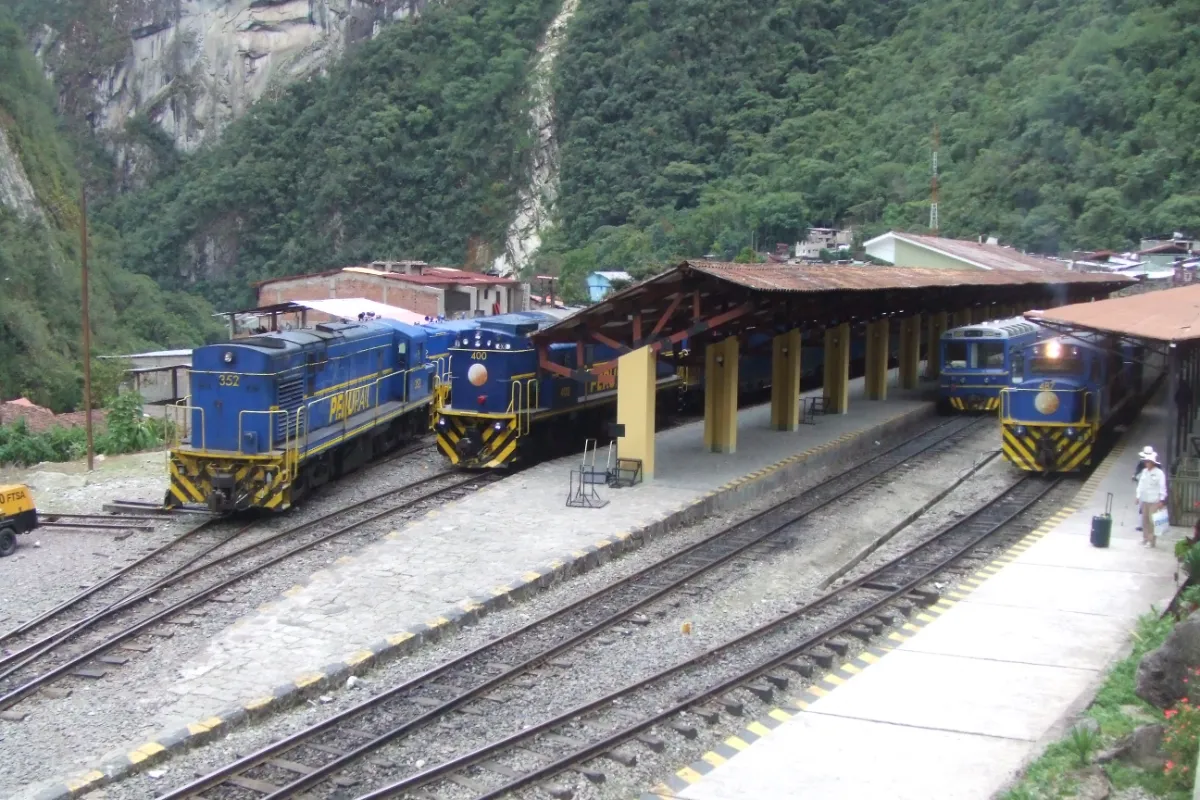
The train station is in the center of town, next to the market. To go up to the citadel, take the bus from Av. Hermanos Ayar: US$ 24 round trip, about 25 minutes. Everything about it is in Machu Picchu bus: price, schedule and where to buy, and hotels are in where to stay in Aguas Calientes.
Which one should you choose?
- If you’re doing Machu Picchu in one day: car and train via Ollantaytambo. It’s the only way to go and come back the same day.
- If you’re based in Cusco and traveling May to December: the train from Poroy saves a change of vehicle, but costs more and takes longer.
- If you’re on a tight budget and have two days: the Hidroeléctrica route.
- If you want the full experience: the Inca Trail.
Want us to plan your trip to Aguas Calientes?
We are a Cusco agency registered with MINCETUR and have operated since 2003. We coordinate the transfer, train, bus and entry ticket so everything lines up on time.
- Machu Picchu Full Day: transfer, train, bus, ticket and guide in one day, from US$ 375.
- Machu Picchu by car, 2 days: via Hidroeléctrica, from US$ 235.
- Sacred Valley and Machu Picchu in 2 days: from US$ 415.
Frequently asked questions
Is there a road from Cusco to Aguas Calientes?
No. You can drive to Ollantaytambo or to Hidroeléctrica, but the last stretch to Aguas Calientes is by train or on foot beside the tracks. That’s why every route combines a car with a train or a walk.
How much does it cost to get from Cusco to Aguas Calientes?
Via Ollantaytambo, a standard-class train costs US$ 60 to 80 each way, plus the transfer: S/ 15 to 20 by colectivo or US$ 50 for a private Tari transfer. Via Hidroeléctrica, the van costs about US$ 30 round trip and the walk is free.
How long does it take from Cusco to Aguas Calientes?
Via Ollantaytambo, 3 h 30 to 4 h 30 in total: 1 h 30 to 2 h by road and 1 h 20 to 1 h 45 by train. By direct train from Poroy, 3 h 15 to 3 h 45. Via Hidroeléctrica, 8 to 11 hours including the van and the walk.
What is the cheapest way to get to Aguas Calientes?
The Hidroeléctrica route: a shared van from Cusco (US$ 14 to 18 each way) and a 10 to 11 km walk beside the railway. It takes most of the day and isn’t a good idea at night or in heavy rain.
Does the Machu Picchu train leave from Cusco?
Yes, from May to December 2026: PeruRail leaves from Poroy and San Pedro stations. From January to April, and with Inca Rail all year, tickets from Cusco combine a bus to Ollantaytambo with the train from there.
Which train is better, PeruRail or Inca Rail?
Both use the same track and reach the same station in about the same time. Choose by the departure that best fits your Machu Picchu entry time and by price; the service differences are in the panoramic and luxury classes.
Can you do Machu Picchu as a day trip from Cusco?
Yes, via Ollantaytambo by train. You leave Cusco before dawn and get back at night. That’s what a Full Day tour does, with the transfer, train, bus, ticket and guide included.
What luggage can I take on the Machu Picchu train?
Carry-on only: 8 kg on Inca Rail, and a backpack of 8 kg or a carry-on of up to 12 kg on PeruRail. Leave big suitcases at the free storage in Ollantaytambo or at your Cusco hotel.
Sources
- PeruRail: May–December 2026 timetable
- PeruRail: changes from October 8 to December 31, 2026 (in Spanish)
- Machu Picchu World: train to Machu Picchu, classes and fares checked in November 2026
- Turismo Liberty: PeruRail vs. Inca Rail, 2026 reference prices (June 2026, in Spanish)
- The Only Peru Guide: Aguas Calientes to Machu Picchu bus (November 2026)
- Tari Tours: Cusco taxi and transfer rates (November 2026)
Photos in this guide are from Wikimedia Commons under free licenses; the author and license appear below each image.