
The textiles of Cusco and the Sacred Valley are more than clothing: they’re pieces that tell the Inca view of the world. Their complex patterns and strong colors come from a dyeing and weaving process that has changed very little over the centuries.
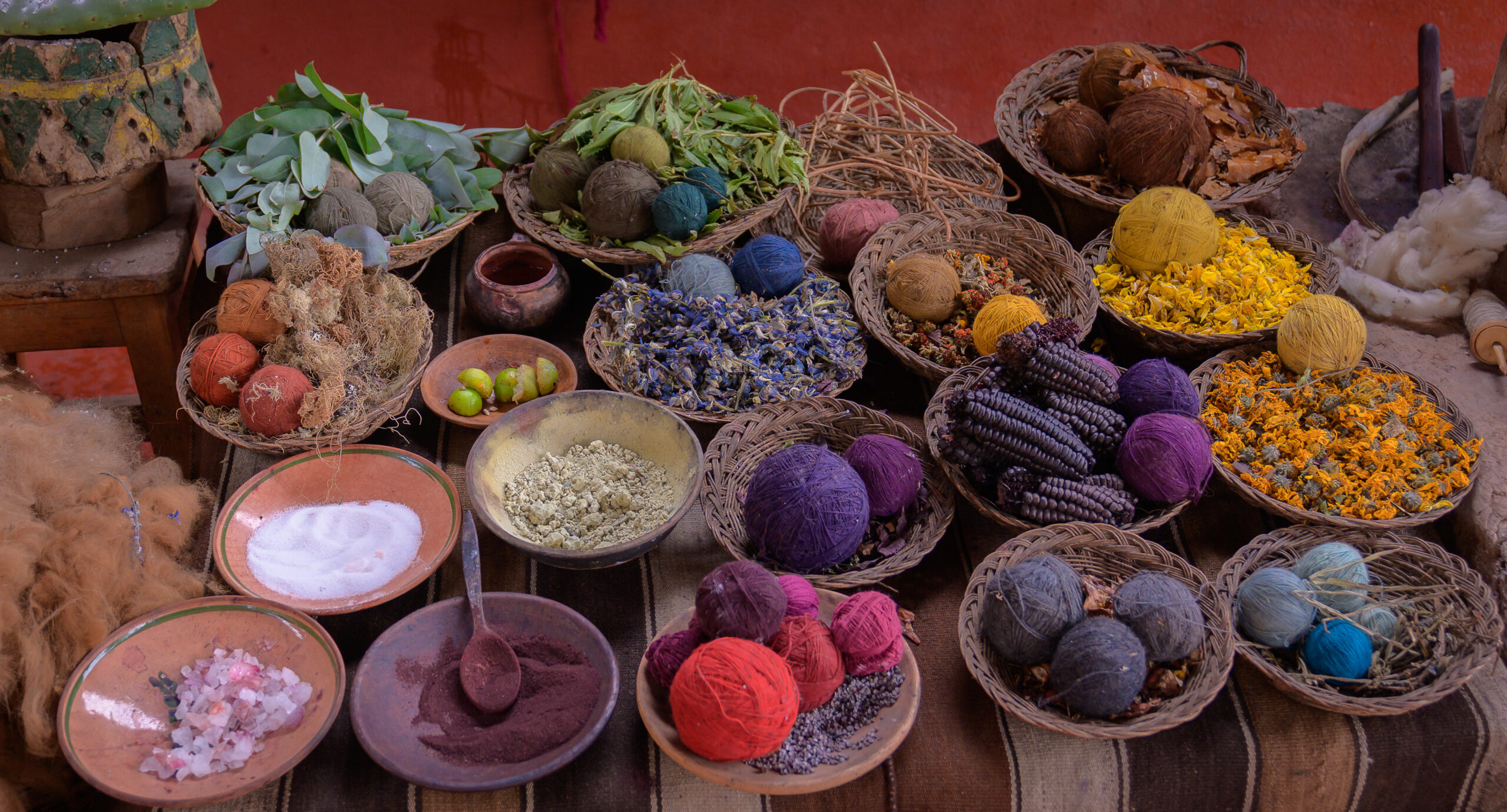
If you want to take home an authentic souvenir and understand what it means, here’s where Andean colors come from.
Red: cochineal
The shades of red and purple that dominate so many Andean textiles come from a surprising source: an insect.
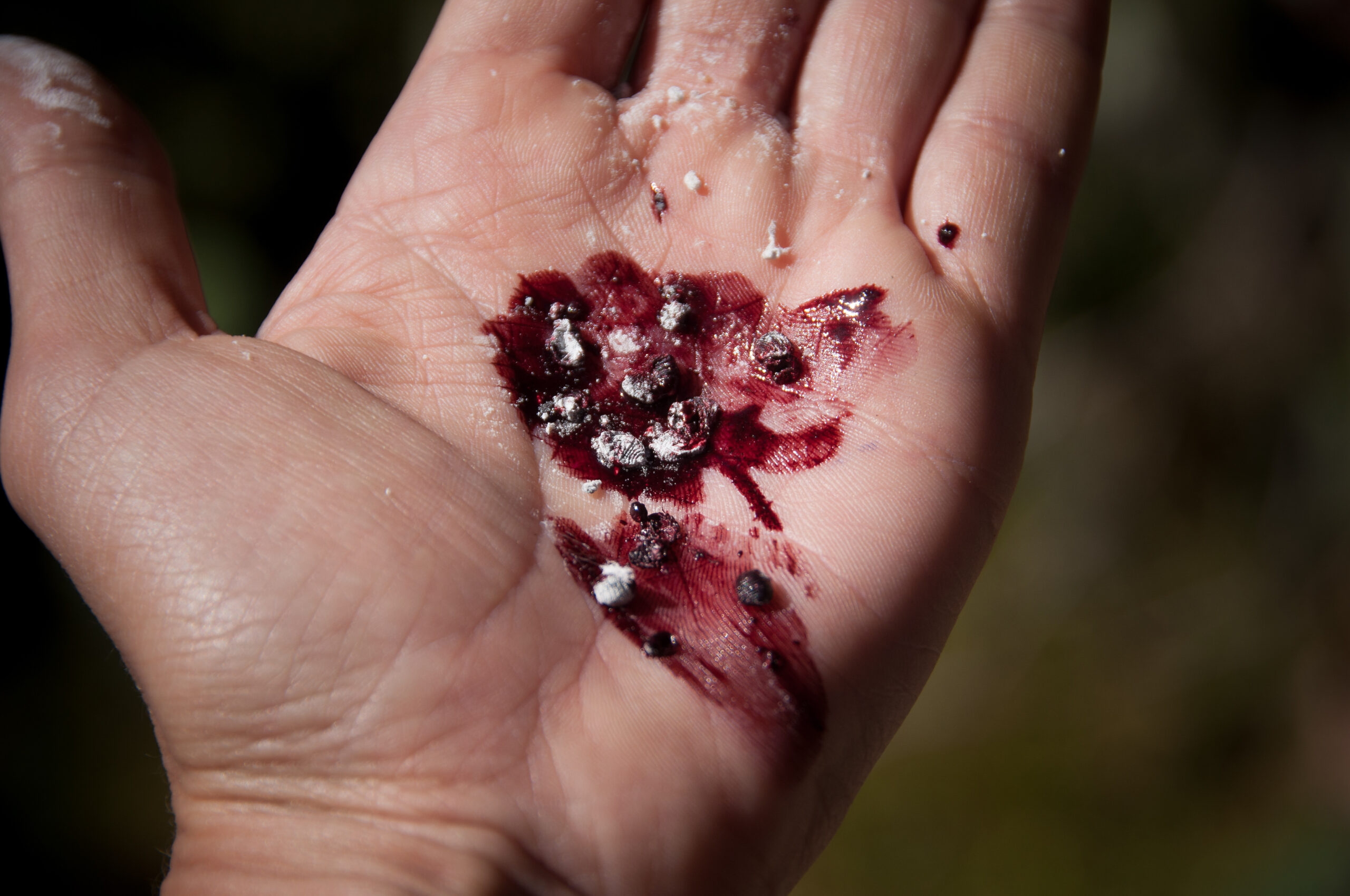
- The insect. Cochineal is a small parasite that lives on prickly pear cactus (tuna). When crushed, it releases carmine, a red pigment so strong that it was one of the main products Peru exported to Europe in colonial times.
- The demonstration. At many community textile centers, they show you how the insect’s color shifts from red to orange or purple with a few drops of lime juice or baking soda. This is the basis of the primary colors.
The other colors: plants and minerals
The other shades come from local plants, minerals and trees, each with its own extraction process:
| Color | Natural source | Cultural meaning |
|---|---|---|
| Yellow/orange | Muña leaves or corn seeds | The Sun (Inti) and abundance |
| Green | Chilca leaves or lichens | Nature and fertility (Pachamama) |
| Black | Q’olle root (with mineral salts) | The dark earth (Uku Pacha) and austerity |
| Blue | Wild indigo leaves | The sky and water |
The dyeing secret: the fiber (alpaca or sheep wool) is boiled with the natural pigment and a fixative (the mordant), such as animal urine or alum, so the color doesn’t fade.
The designs: patterns with a message
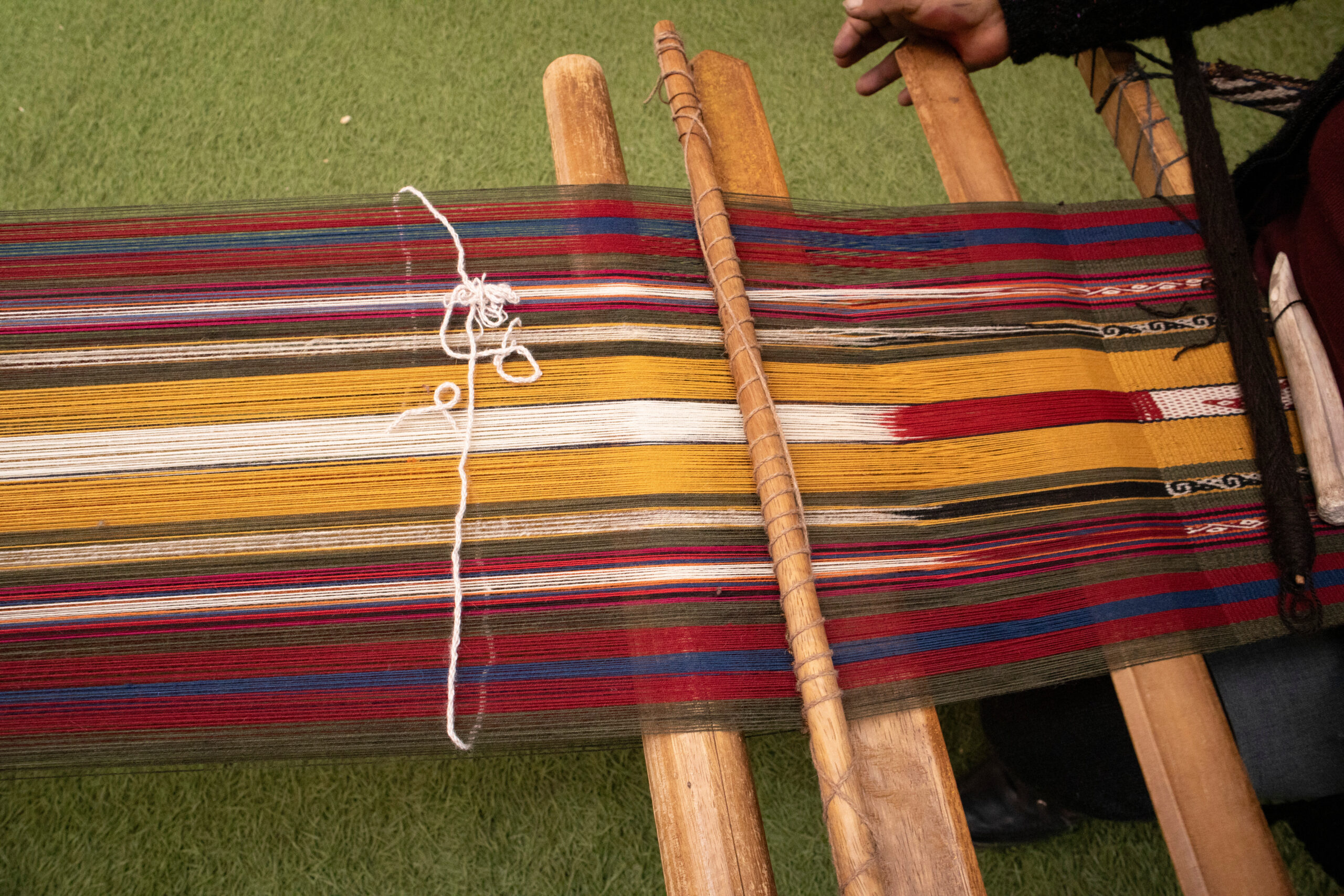
The geometric patterns (tocapus) on Inca textiles aren’t decoration: they’re a system of communication that shows the social rank, origin and beliefs of the person wearing the piece.
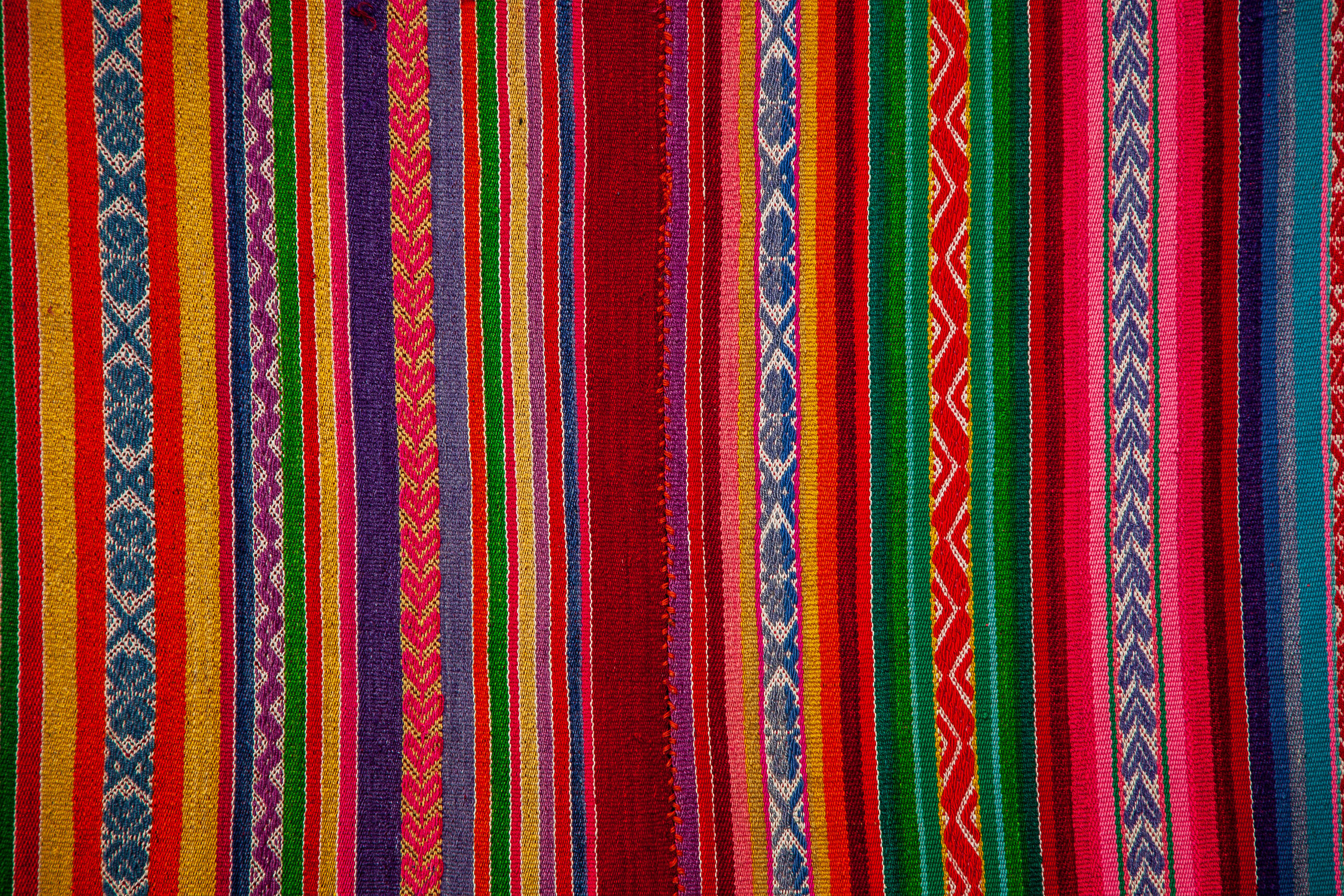
Figures to look for: the Chacana (the Andean cross that represents the three worlds) and the designs that represent water and earth. A local weaver can “read” the story in a blanket or a poncho.
Where to see the real process
To learn about textiles and buy them ethically, visit the community weaving centers:
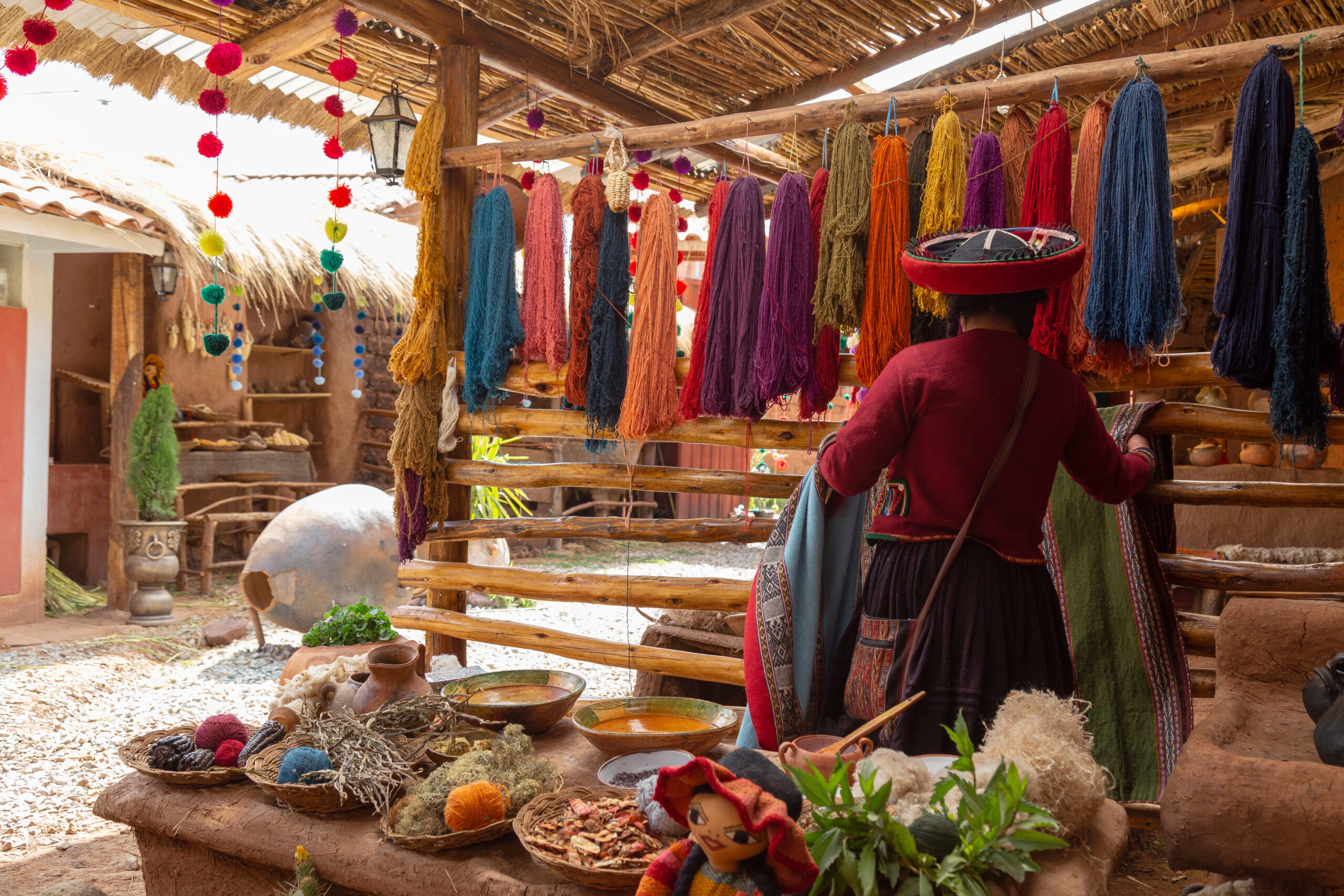
- Chinchero. The town is known for its weavers’ associations. There you can see the whole process, from washing the wool to dyeing it with cochineal and finishing the piece. It’s the most authentic and educational visit in the Sacred Valley.
- Pisac. The Sunday market is great for shopping, but to see the dyeing process, a community center is better.
Shopping tip: choose a textile whose process has been explained to you. That way you take home more than a blanket: you take home a tradition that goes back thousands of years.
Want to see natural dyeing up close?
We’re a local agency in Cusco, registered with MINCETUR since 2003, with English-speaking guides. We can add a visit to a community textile center to your Sacred Valley tour.